
Engineering & Quality
Explore key decisions in ceramic component development through structural design, inspection, joining and practical engineering considerations.
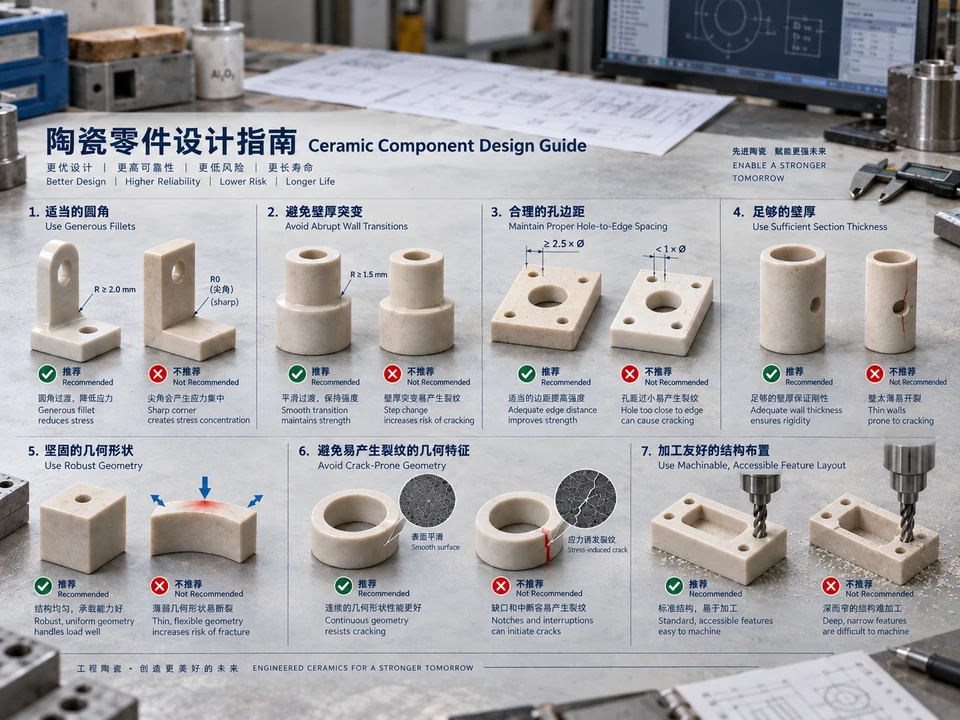
Design Principles
Avoid sharp corners, abrupt changes in wall thickness and features that are difficult to fixture or inspect. Apply tight tolerances to dimensions and datum relationships that affect function.
- Use appropriate fillets and transitions.
- Allow access for both machining and inspection.
- Consider assembly sequence and differences in thermal expansion.
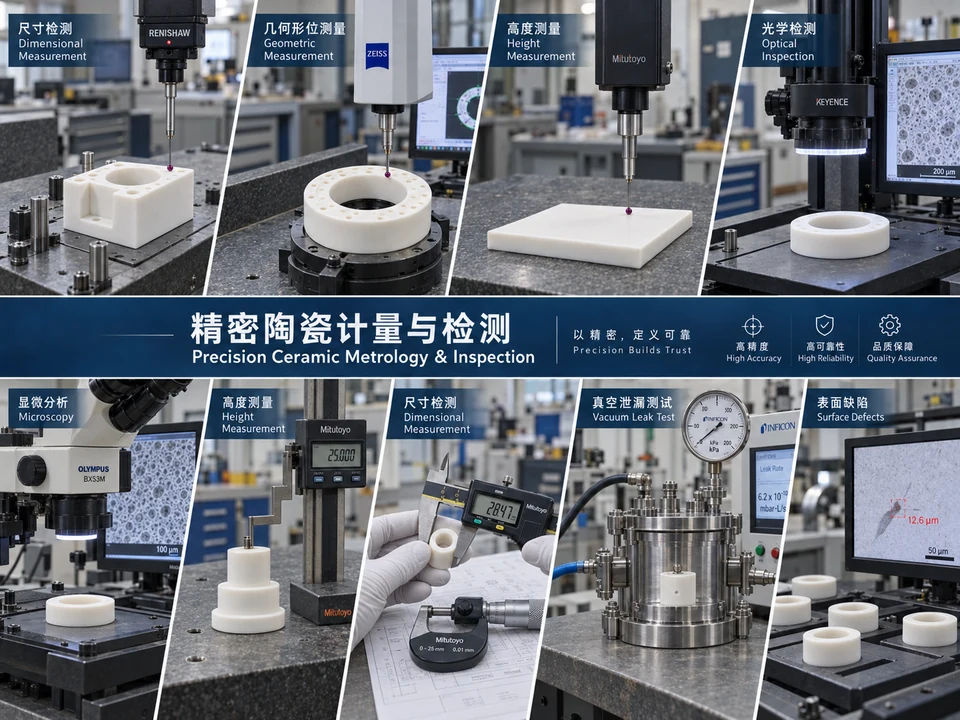
Inspection & Quality Control
Dimensions, geometry, surface condition, microscopic defects and functional verification contribute to quality assessment. Methods such as a Coordinate Measuring Machine (CMM), roundness measurement and surface roughness measurement are selected to suit the drawing requirements.
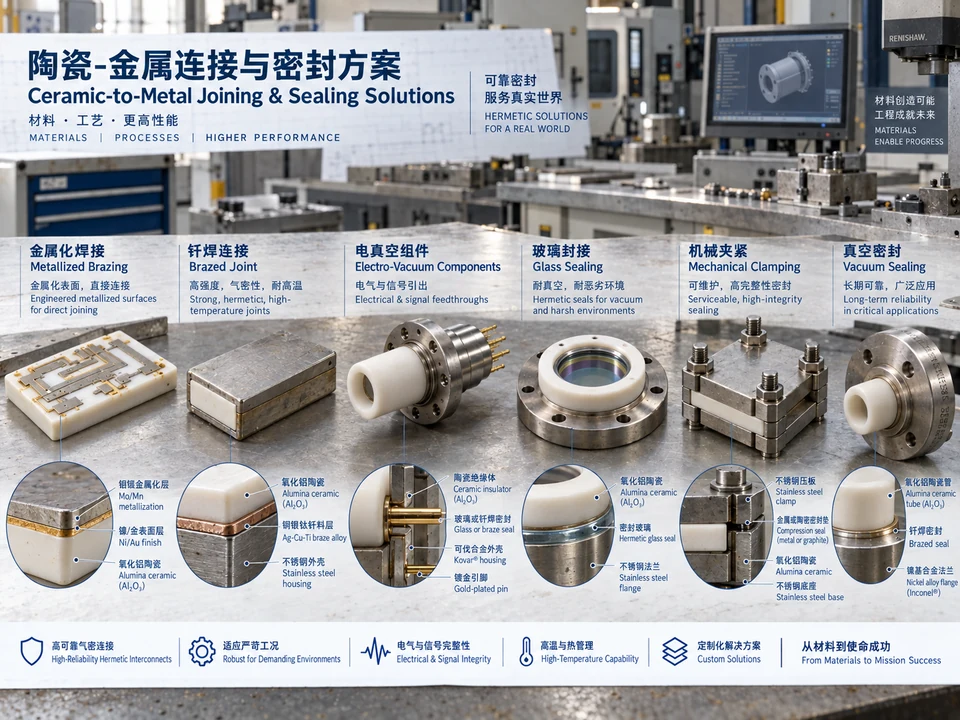
Joining & Assembly
Ceramic-to-metal assemblies require consideration of interface layers, joining methods, sealing requirements and the final assembly function.
Engineering Reference
Review how drawings, tolerances, surface quality, sealing, material consistency and inspection connect design, manufacturing and component reliability.
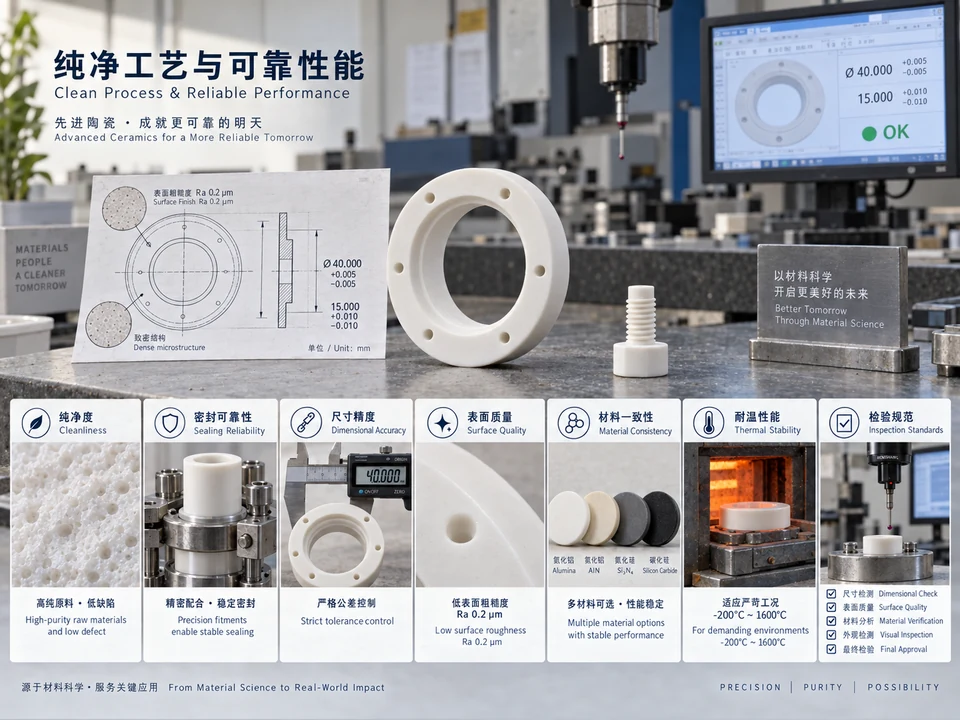
Joining Methods & Acceptance Criteria
Metallization, brazing, glass sealing and mechanical assembly are within our scope. Selection depends on the materials, interfaces and service conditions.
Metallization
A metal layer is applied to defined ceramic surfaces for subsequent joining or electrical functions. Specify the material, coated and excluded areas, and intended use. Metallization alone does not establish a hermetic seal.
Brazing
Define the ceramic and metal, joint location, assembly dimensions and service conditions. Assess the material combination, interface approach and thermal expansion together. Sealing requirements need defined test conditions and acceptance criteria.
Glass Sealing
Discuss compatibility between the sealing glass and joined materials, geometric constraints and operating temperature. Specify tests for required insulation or sealing functions; appearance alone cannot demonstrate performance.
Mechanical Assembly
Define locating datums, clearances, fastening and load locations, together with assembly sequence and thermal expansion. Agree handling and inspection requirements for vulnerable edges, contact surfaces and critical assembled dimensions.
Contact Us
Contact us by telephone or email to discuss advanced ceramics, precision machining, component design, inspection and joining.
Before You Get in Touch
- Drawings & GeometryComponent name, drawing revision, main dimensions and critical features.
- Material & Service ConditionsKnown material or grade, intended use and operating conditions.
- Quantity & TimingQuantity for this request, future demand and requested delivery date.
- Quality & AssemblyCritical tolerances, surfaces, inspection documents and joining or assembly requirements.
- Available InformationDescribe available drawings, photos or samples and any points to discuss.
- Contact DetailsCompany or project name, contact person and a telephone number or email for a reply.
Start with the information and goals you have; open points can be discussed. The button opens your email app with an outline. Add attachments in your email.