
Materials & Properties
Understand the roles and characteristic properties of common advanced ceramics, and how material selection relates to service conditions.
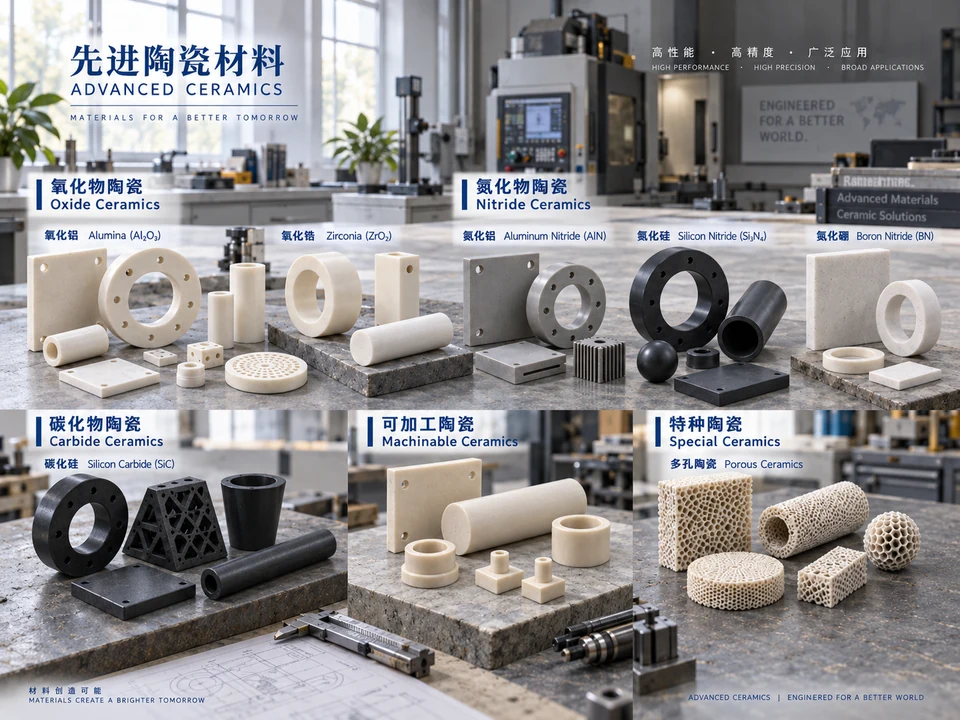
Common Materials
Alumina, zirconia, aluminum nitride, silicon nitride and silicon carbide offer different balances of insulation, heat transfer, wear resistance, toughness and high-temperature performance.
- Alumina: an established choice for electrical insulation and wear resistance.
- Zirconia: valued for toughness in suitable structural applications.
- Aluminum nitride: combines thermal conductivity with electrical insulation for thermal management.
- Silicon nitride / silicon carbide: options for demanding thermal or mechanical conditions, subject to grade selection.
Properties & Material Selection
Compare characteristic properties against operating and manufacturing requirements. Actual values depend on the selected grade and test conditions.
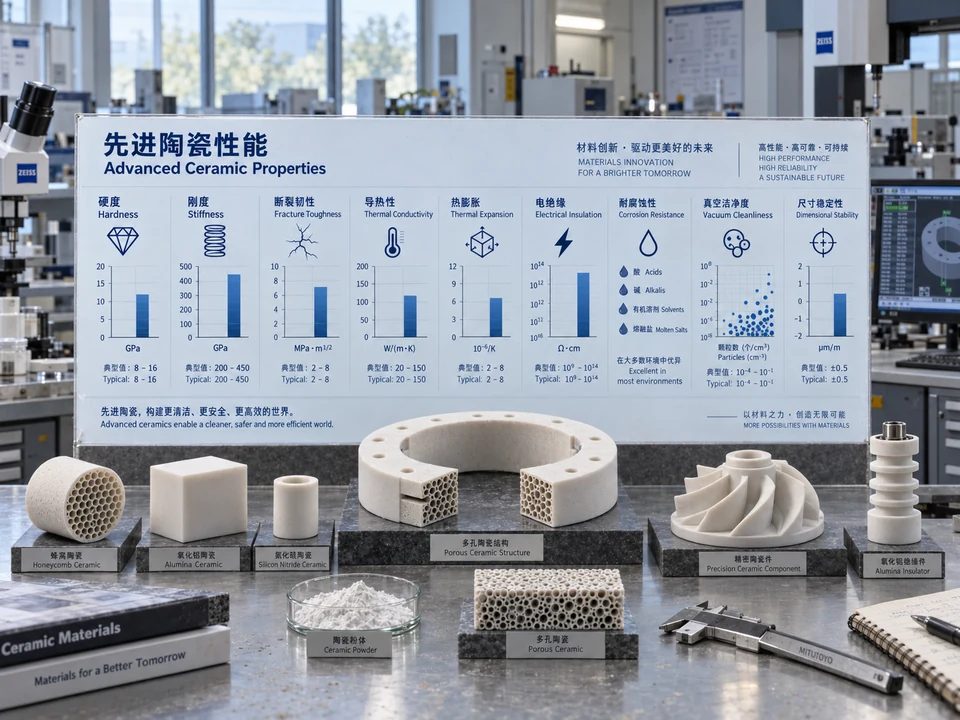
Begin with temperature, media, loads, electrical requirements and thermal management.
Consider forming methods, sintering shrinkage, machining allowances, tolerances and inspection requirements.
Balance functional performance, manufacturing consistency and overall cost.
On narrow screens, scroll horizontally to view the full table.
| Material | Typical Characteristics | Typical Uses |
|---|---|---|
| Alumina | Insulation, wear resistance and stability; established processing and cost structure | Insulators, wear parts and structural components |
| Zirconia | Relatively high toughness and good wear resistance | Rings, sleeves and suitable impact-resistant structures |
| Aluminum Nitride | Thermal conductivity combined with electrical insulation | Electronic thermal management and substrates |
| Silicon Nitride | Combines strength, toughness and thermal shock resistance, subject to grade and loading conditions | Structural components subject to loads, motion and thermal cycling |
| Silicon Carbide | High hardness, heat transfer and wear resistance; corrosion suitability depends on the specific medium | Wear parts, thermal management and components for suitable corrosive environments |
From Material Family to Selection
All five material families are within our scope. Grade and delivery requirements must be defined for the component; the family name alone does not establish suitability.
Define Service Conditions
Describe temperatures and changes, contact media, loading, and insulation or heat-transfer needs. Where requirements compete, identify the primary function and essential constraints.
Specify Grade & Data Basis
If a material is specified, provide its grade and supporting document. Otherwise, start with the application. Property data must relate to the grade and test conditions rather than illustrative figures.
Consider Geometry & Delivery Together
Selection also depends on wall thickness, holes and slots, joining interfaces, quantity and inspection requirements. Include these in the inquiry to help resolve material and geometry questions together.
Contact Us
Contact us by telephone or email to discuss advanced ceramics, precision machining, component design, inspection and joining.
Before You Get in Touch
- Drawings & GeometryComponent name, drawing revision, main dimensions and critical features.
- Material & Service ConditionsKnown material or grade, intended use and operating conditions.
- Quantity & TimingQuantity for this request, future demand and requested delivery date.
- Quality & AssemblyCritical tolerances, surfaces, inspection documents and joining or assembly requirements.
- Available InformationDescribe available drawings, photos or samples and any points to discuss.
- Contact DetailsCompany or project name, contact person and a telephone number or email for a reply.
Start with the information and goals you have; open points can be discussed. The button opens your email app with an outline. Add attachments in your email.