
High-Voltage Electrode Feedthrough
Ceramic-to-Metal Assemblies
Overview
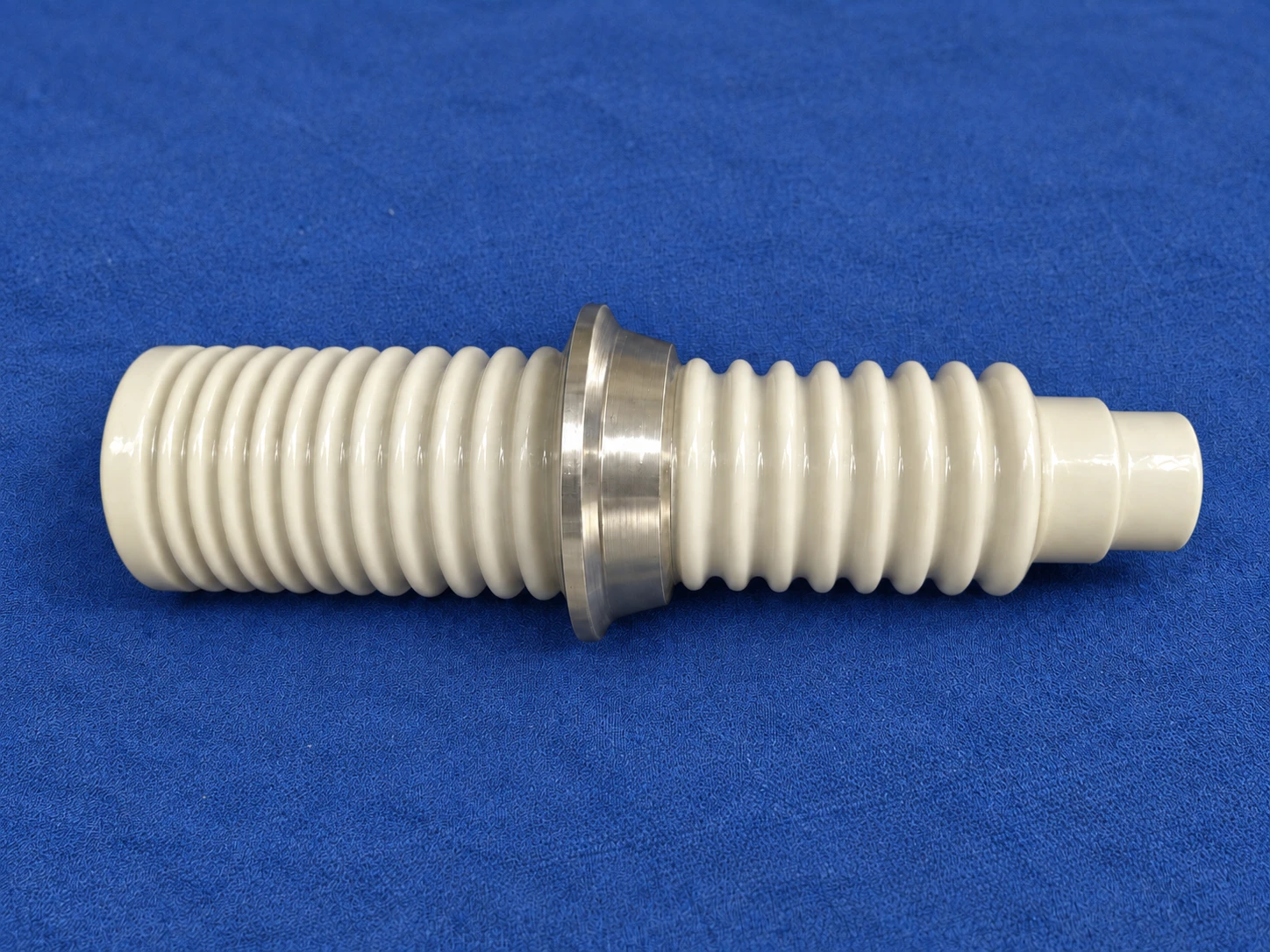
A hollow externally ribbed ceramic body combined with a Kovar connector and transition piece to form a high-voltage electrode feedthrough.
- Material
- A-95 ceramic and 4J33 Kovar alloy
- Specifications
- Φ66 × 198 mm
- Key Manufacturing Features
- A hollow externally ribbed ceramic body combined with a Kovar connector and transition piece to form a high-voltage electrode feedthrough.
Technical Drawing
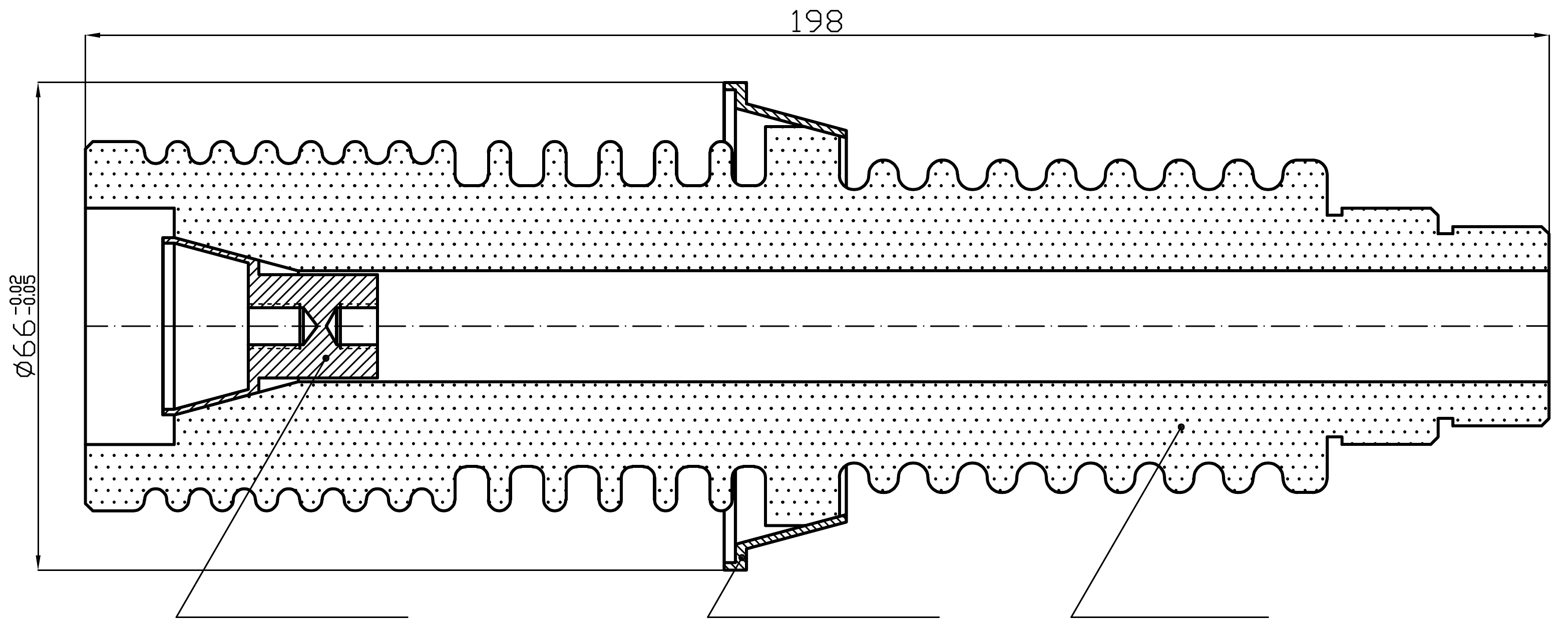
Technical Requirements
- Use vacuum brazing for ceramic-to-metal joints; tensile strength shall be at least 100 MPa under the manufacturer’s technical specification.
- The electrode assembly may be joined to the loose flange by TIG or other fusion welding. Provide cooling protection without impairing the brazed seal.
- Helium leak rate shall not exceed 4×10⁻¹⁰ Pa·m³/s; the drawing specifies a withstand voltage of 150 kV.
- Maximum permitted bakeout temperature: 250°C.
- Connector: Φ24×M6×29, 4J33, one per assembly. Transition piece: Φ66×Φ51×16.5, 4J33, one per assembly.
- Ceramic body: Φ54×Φ15×198, A-95, one per assembly.
- Material standards: A-95 GB/T 5593-1996; 4J33 YB/T 5231-2005.
Product Illustration
CONTACT
Contact Us
Contact us by telephone or email to discuss advanced ceramics, precision machining, component design, inspection and joining.
AddressCourtyard No. 1, Wanhong Road, Jiuxianqiao, Chaoyang District, Beijing, China
FocusAdvanced ceramics, precision machining, inspection and assembly
Before You Get in Touch
- Drawings & GeometryComponent name, drawing revision, main dimensions and critical features.
- Material & Service ConditionsKnown material or grade, intended use and operating conditions.
- Quantity & TimingQuantity for this request, future demand and requested delivery date.
- Quality & AssemblyCritical tolerances, surfaces, inspection documents and joining or assembly requirements.
- Available InformationDescribe available drawings, photos or samples and any points to discuss.
- Contact DetailsCompany or project name, contact person and a telephone number or email for a reply.
Start with the information and goals you have; open points can be discussed. The button opens your email app with an outline. Add attachments in your email.